
Running a behavioral health treatment center comes with unique challenges. From navigating complex regulatory requirements to maintaining effective care coordination, the demands can overwhelm even the most well-structured operations. Trying to run your business while relying on outdated or generic technology brings your inefficiencies to light and creates gaps in care delivery. A specialized customer relationship management (CRM) system can be the critical solution to modernizing and optimizing your facility.
Why mental health clinics need a specialized CRM
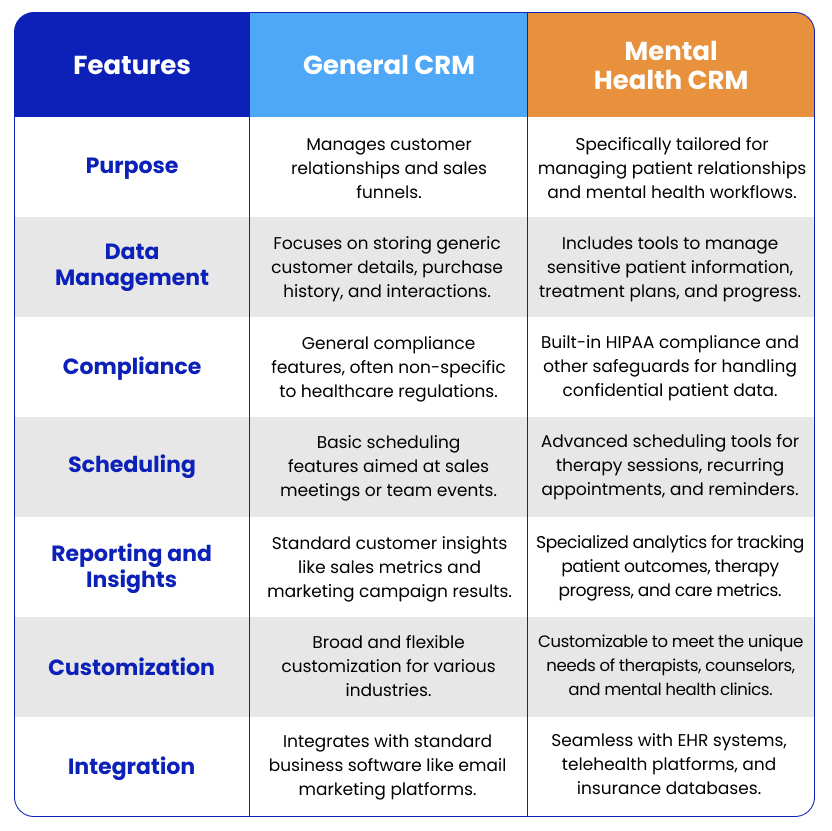
When relying on a generalized CRM, operational struggles can become a barrier to growth and care quality. Admission specialists may spend hours transferring patient data between platforms, creating opportunities for errors. Clinical staff often face redundant paperwork, and billing processes can suffer from inefficiencies caused by fragmented data flow. While generalized CRMs manage basic tasks, they lack the depth and functionality needed to meet the demands of a specialized behavioral health setting.
This is the limitation of generic systems. While tailored to fit broad industries, they lack the tools crucial to behavioral health, such as HIPAA-compliant security, care coordination enhancements, and integrated clinical documentation. These gaps result in inefficiencies that add to staff burnout, which can cause turnover.
AION Recovery’s switch to a specialized CRM
AION Recovery recognized that fragmented workflows and time-consuming manual tasks were holding back both staff and patient care. By adopting Sunwave’s behavioral health-specific platform, they unified admissions, clinical, and billing processes on a single platform. This change removed redundant data entry and improved coordination between teams. As a result, staff efficiency improved across the board, allowing more focus on patients and less on administrative hassle.
Key features that support mental health workflows
CRMs for behavioral health providers are purpose-built to handle the intricacies of mental health treatment operations. They alleviate key pain points plaguing generic solutions by offering features tailored to streamline workflows.
HIPAA compliance and data security
- Built-in encryption and user access controls safely manage patient data.
- Automated compliance audits that meet regulatory demands, reducing the risk of breaches.
Streamlined care coordination
- CRMs that seamlessly work with EMR platforms make treatment plans, session notes, and secure team communication accessible from a single platform.
- Real-time notifications kept staff aligned, reducing miscommunication.
- Telehealth scheduling and virtual appointment reminders improve patient attendance rates.
Advanced patient engagement tools
- Automated appointment reminders minimize no-shows and improve attendance rates.
- A patient-facing portal provides easy access to resources, appointment information, and treatment updates.
- Call tracking metrics allow for more timely follow-ups and better watch on qualified leads.
Documentation and workflow support
- Intuitive forms pre-populated with patient information save clinical and administrative teams substantial time.
- Required fields and digital signatures ensure no steps are missed, improving documentation accuracy.
Automated benefits verification
- Seamless integration with insurance databases speeds up verification processes, reducing delays.
- Eligibility checks can be processed quickly, ensuring patients can begin treatment without lingering administrative hurdles.
General vs. Behavioral health CRMs
How can you improve patient engagement and compliance with a CRM?
Patient engagement and compliance drive success for your treatment centers. AION’s adoption of a behavioral health-specific CRM demonstrates how these challenges can be tackled head-on.
Better-fit patients = better engagement
Your admissions team’s success starts before patients even begin treatment. With a specialized CRM, AION was able to have better line-of-sight for patients who were best fit for success in their program—saving them around 15 minutes per admission. By verifying insurance upfront and using scheduled follow-ups based on real interaction data, you can find the patients who are right for your program and stay in contact with them.
More efficient forms
When forms can be accessed and filled out online, admissions teams experience a significant reduction in administrative tasks. This allows for more time to focus on building relationships with patients and providing them with the best care possible.
A specialized CRM can also provide customizable forms that are tailored to your specific program’s needs. This ensures that all necessary information is collected from the patient, making the admission process smoother and more efficient.
Role-based access and encryption
Your operation has to remain compliant with HIPAA to stay open. Switching to a CRM for mental health facilities means switching to a product that is designed with compliance in mind. Encryption for data-at-rest and data-in-transit is standard with most CRMs and ensures the safety and confidentiality of patient information. Role-based access control allows for different levels of user permissions, meaning that only authorized personnel have access to sensitive data.
Why choose a behavioral health-specific CRM?
Generic CRMs might seem like a cost-effective option initially, but they often create more problems than they solve. Over time, you might find yourself spending more on third-party apps, IT workarounds, and data breaches. Here are some reasons why a behavioral health-specific CRM might be the best solution for your organization:
- Scalable solutions: Your CRM can grow with your organization, ensuring that it can handle increased patient volume and data management needs.
- HIPAA compliance: A behavioral health CRM is built with HIPAA requirements in mind, ensuring that your organization remains compliant and avoids costly fines.
- Data analytics: Track admissions and census data, referral sources, and other important metrics to inform your organization’s strategic decisions.
- Integration with EHRs: Some behavioral health CRMs offer integration with electronic health records systems, making it easier to access and share patient information securely.
- Customization options: A behavioral health CRM can be tailored to your organization’s specific needs and workflows, rather than trying to fit into a one-size-fits-all solution.
- Dedicated support: Around-the-clock support gives your IT team peace of mind knowing that any technical issues or questions will be addressed promptly.
AION’s proven results
Through their adoption of Sunwave Health, AION achieved:
- A 95% reduction in avoidable emails.
- A 30-minute daily time savings on form audits.
- Faster insurance verifications and admissions.
- Enhanced team efficiency, allowing staff to focus more on patient care.
AION demonstrated that having the right software isn’t just about operating smoothly—it’s about creating a foundation for sustainable, high-quality care.
Make the switch to Sunwave today
Do your clinical teams have a workflow that just works but falls flat when it comes to working with other tools or staying compliant? We can help. The Sunwave platform can be easily customized to fit your team’s needs. CRM is just one piece of Sunwave’s all-in-one behavioral health platform that works seamlessly with our EMR, telehealth, and RCM modules. Better patient engagement and compliance are possible, and easier than you might think.
Find out why we’re one of SourceForge’s Top Performers for Spring 2025. Schedule a demo online or call 561.576.6037 to start building the right solution for your operation with our team.